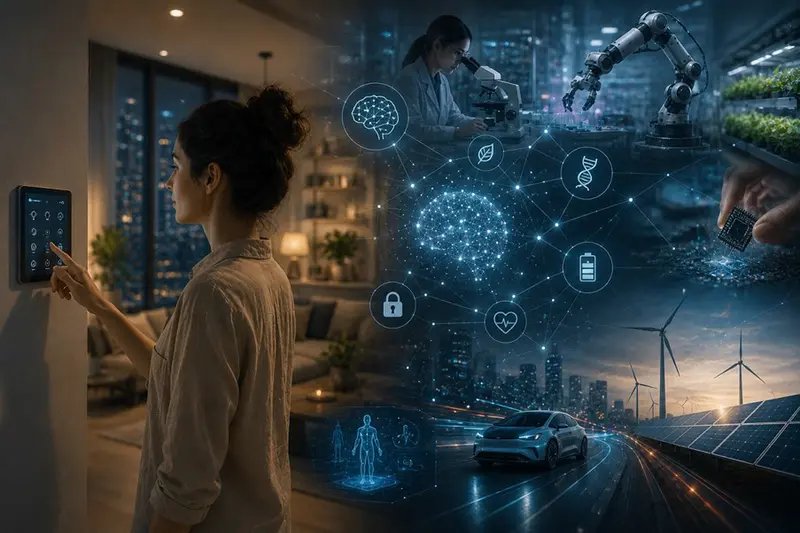
For years, the technology industry believed game-changing innovation had to look dramatic.
The biggest breakthroughs often arrived with global product launches, headline-grabbing valuations, and bold promises about reshaping the future. Smartphones transformed communication. Social media redefined interaction. Cloud computing changed enterprise infrastructure. Artificial intelligence accelerated automation across industries. Each major technological wave appeared highly visible and impossible to ignore.
The technology sector became deeply associated with disruption.
Companies competed aggressively to move faster, scale larger, and dominate attention. Innovation itself became closely tied to visibility. The most celebrated businesses were often those changing consumer behavior most dramatically or building platforms capable of reshaping entire industries in remarkably short periods of time.
For a long time, this model appeared to define technological progress successfully.
Yet beneath the surface of highly visible innovation, another category of transformation has quietly started reshaping the global economy — one that may ultimately prove just as important, if not more so.
Many of the technologies changing industries most profoundly today are not necessarily the loudest innovations.
They are the systems quietly altering how businesses operate, how people make decisions, how infrastructure functions, and how modern life feels on a daily basis.
This shift matters enormously because the next generation of technological game changers may not always look revolutionary at first glance.
Instead, they may quietly redefine the systems society depends on most deeply.
Historically, technological breakthroughs often felt tangible and obvious. Consumers could physically see the difference new technologies created. Personal computers entered homes. Smartphones replaced multiple devices. Streaming transformed entertainment habits visibly within everyday life.
Today, however, innovation increasingly operates beneath the surface.
Artificial intelligence supports logistics systems consumers never directly interact with. Predictive analytics optimize supply chains invisibly. Automation reshapes industrial processes quietly in the background. Cloud infrastructure powers enormous portions of the global economy without most users ever thinking about it directly.
In many ways, modern technology is becoming less visible precisely because it is becoming more integrated into everyday systems.
This represents an important shift in how innovation itself functions.
The technologies creating the greatest long-term impact increasingly operate quietly rather than theatrically.
One reason this matters is because digital infrastructure now influences nearly every major industry simultaneously.
Healthcare systems increasingly depend on predictive analytics and digital diagnostics. Financial institutions rely heavily on AI-driven fraud monitoring and automated risk analysis. Logistics companies optimize operations through real-time data intelligence. Manufacturing environments integrate robotics and connected infrastructure systems continuously.
The modern economy increasingly runs on layers of technology most people rarely notice directly.
According to McKinsey research, advanced digital technologies and artificial intelligence are expected to create trillions of dollars in economic value globally as industries continue integrating automation, predictive systems, and intelligent infrastructure.
https://www.mckinsey.com/capabilities/mckinsey-digital/our-insights
What makes this transformation particularly important is that it is changing not only how businesses operate, but also how societies think about progress itself.
For years, innovation culture often prioritized visible disruption. Companies wanted to appear revolutionary. Investors rewarded aggressive growth narratives. Technology businesses competed heavily for public attention.
Increasingly, however, the technologies generating the most durable value are often those reducing friction quietly rather than generating excitement loudly.
This may become one of the defining characteristics of the next era of innovation.
Consumers today increasingly value technology that feels:
- intuitive
- dependable
- emotionally manageable
- integrated naturally into daily life
This represents a meaningful shift away from earlier technology cultures built heavily around constant stimulation and aggressive engagement.
The change is subtle, but economically significant.
Modern consumers now live inside highly connected environments saturated with notifications, digital platforms, AI-generated recommendations, and continuous information streams. Technology improved efficiency enormously, but it also increased cognitive intensity.
As digital ecosystems expanded, many people began reassessing how much technological stimulation they actually wanted surrounding everyday life.
This helps explain why some of the most influential technology trends today focus less on adding complexity and more on reducing it.
Automation increasingly aims to eliminate repetitive friction rather than simply accelerate activity. AI systems increasingly focus on assistance rather than visibility. Software platforms emphasize usability and simplicity more heavily than before.
The next major game changers may therefore be technologies making modern life feel calmer rather than more overwhelming.
This shift is especially visible within artificial intelligence.
AI is unquestionably one of the defining technologies of the modern era. But its long-term success may depend less on raw capability alone and more on how naturally AI integrates into everyday systems.
Consumers increasingly ask:
Can these systems be trusted?
Will they simplify life or complicate it?
Will automation remain understandable?
Can people maintain control inside increasingly intelligent environments?
As AI becomes more embedded across industries, emotional trust becomes commercially valuable.
According to PwC, artificial intelligence could contribute up to $15.7 trillion to the global economy by 2030, making responsible deployment and public confidence increasingly central to long-term adoption across industries.
https://www.pwc.com/gx/en/issues/artificial-intelligence/publications/artificial-intelligence-study.html
This creates an interesting paradox.
The more technologically sophisticated systems become, the more important simplicity and trust become alongside them.
Historically, innovation often celebrated complexity. Advanced systems demonstrated engineering achievement and technical sophistication. Today, however, many businesses increasingly recognize that simplicity itself may represent a higher form of innovation.
The technologies people trust most often feel effortless rather than overwhelming.
This transformation is also reshaping enterprise technology.
For years, businesses aggressively adopted digital systems designed to maximize productivity, automate operations, and accelerate communication. Remote work accelerated this transformation significantly. Cloud infrastructure, collaborative platforms, predictive analytics, and AI-driven workflows rapidly became standard operational tools across industries.
Operationally, the efficiency gains were enormous.
But many organizations also discovered that technological capability alone does not automatically create sustainable work environments.
Employees increasingly navigate:
- notification overload
- fragmented communication systems
- digital fatigue
- continuous virtual collaboration
- information saturation
As a result, many businesses are beginning to rethink how technology should support human performance over time.
Increasingly, enterprise innovation focuses not only on productivity, but also on reducing cognitive overload and improving operational clarity.
According to Microsoft’s Work Trend Index, professionals increasingly prioritize manageable digital environments, healthier workflows, and technology systems reducing friction rather than intensifying stress.
https://www.microsoft.com/en-us/worklab/work-trend-index
This reflects a broader evolution in how technology companies define success.
Historically, user engagement often dominated technology strategy. More interaction implied stronger growth. More screen time suggested greater platform value.
Now many organizations increasingly recognize that sustainable engagement may depend on emotional sustainability as well.
Consumers increasingly evaluate technology based not only on functionality, but on how systems make them feel over time.
Does this technology create confidence or anxiety?
Does it reduce friction or increase mental exhaustion?
Does it support focus or constantly interrupt it?
Does it help people feel more capable or more dependent?
These questions are becoming commercially significant because emotional trust increasingly shapes long-term adoption.
Interestingly, some of the most important technological game changers today are not necessarily consumer products at all.
They are infrastructure systems operating quietly beneath modern life.
Cloud architecture allows global businesses to operate continuously across borders. Cybersecurity systems protect financial infrastructure and sensitive data. Predictive maintenance technologies prevent industrial failures. Intelligent logistics networks optimize global trade flows. Renewable energy management systems improve grid efficiency dynamically.
These systems rarely dominate public conversation the way smartphones or social media once did.
Yet they increasingly shape the operational stability of modern economies themselves.
This may represent one of the biggest changes happening quietly across the technology sector.
Innovation is becoming infrastructural.
The future global economy will likely depend heavily on technologies consumers rarely notice directly but rely on constantly behind the scenes.
This shift also changes how excellence itself is recognized.
Historically, technology often rewarded speed above all else. Companies moved aggressively to launch products, dominate markets, and scale rapidly.
Increasingly, however, long-term success may depend on balance.
The most valuable game changers may not simply be those building the fastest systems or generating the loudest headlines.
They may increasingly be the organizations capable of building technologies that remain:
- reliable
- trusted
- adaptable
- emotionally sustainable
- resilient under pressure
That distinction matters enormously because modern societies now depend deeply on technological infrastructure functioning consistently every day.
The cost of technological failure is becoming larger.
As systems become more interconnected, reliability itself becomes economically critical.
This may become one of the defining business lessons shaping the next decade of innovation.
Technology improves efficiency. But trust sustains adoption.
In many ways, the technology industry is rediscovering something it temporarily overlooked during years dominated by hyper-acceleration.
The most transformative innovations are not always the ones attracting the most attention immediately.
Often, they are the technologies quietly reshaping how modern life functions beneath the surface.
The future of innovation will unquestionably remain highly advanced. Artificial intelligence, predictive analytics, automation, robotics, cloud infrastructure, biotechnology, and quantum computing will continue transforming industries rapidly over the next decade.
But another quieter transformation may occur alongside technological advancement.
The technologies most likely to become true game changers may not simply be those appearing most futuristic.
They may increasingly be the systems helping modern economies become more stable, resilient, understandable, and sustainable while the world around them continues accelerating.
And in many ways, that may prove to be the most important innovation shift of all.